
Bibb County’s Forgotten Tourist Attraction
Do you remember the first swimming pool that opened in Bibb County, Alabama. Did you ever visit the two-story resort hotel that was accompanied by a camp ground, a billiards room, a dance hall, and offered magical healing remedies. The primary attraction was a magical mineral water that cured what ailed you. Unless you are older than I am your answer would be a no because this famous tourist attraction faded away and essentially disappeared from public view…..probably by the mid-1940’s. The spring itself survived the demise of the hotel for a few years. Today, only the name remains, marked by a small sign along Highway 25 that points in the direction of the old resort.
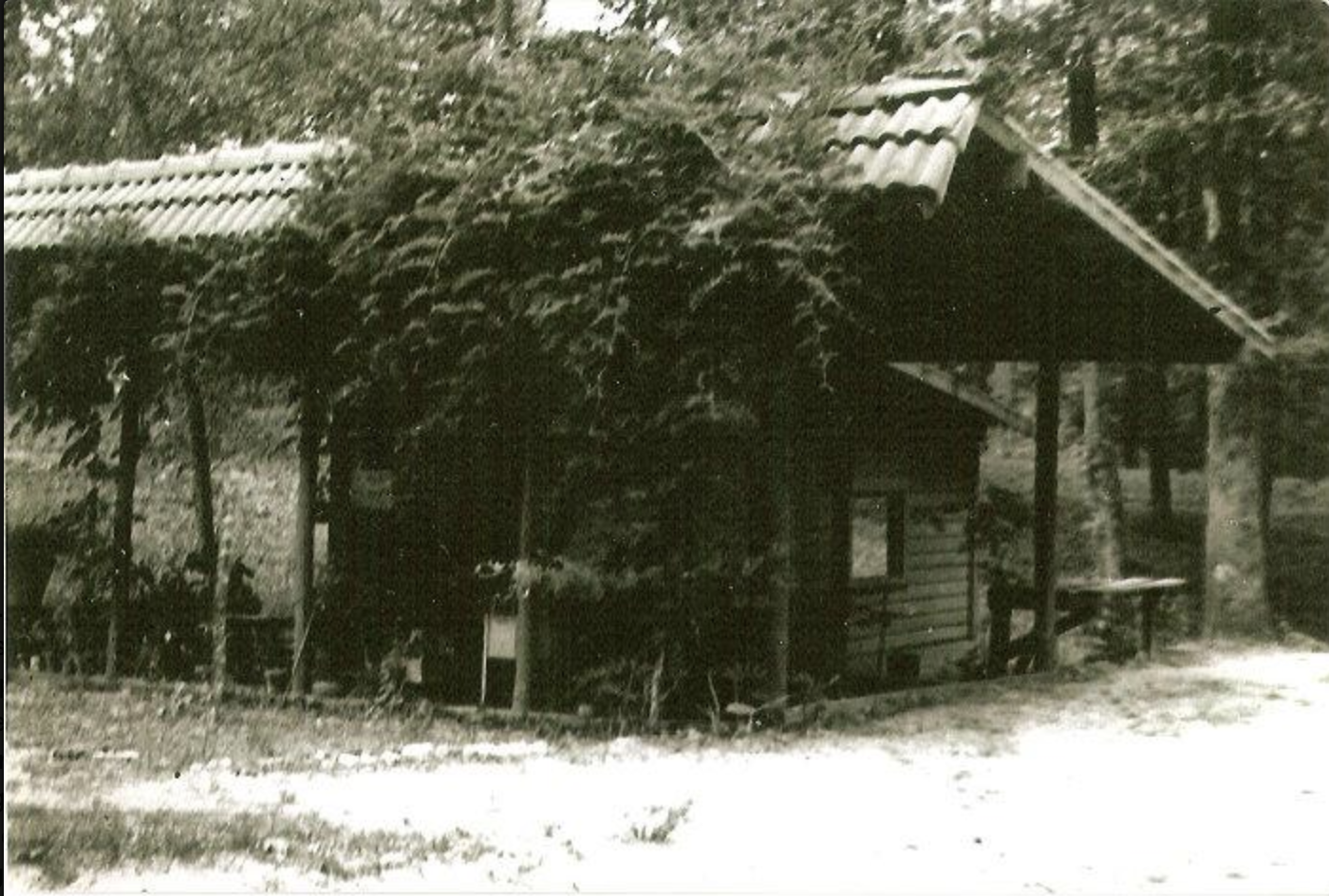
The photo featured at the beginning of this article is the last known structure to have been built over the spring. Water was bottled and sold from this location.
Gary Springs (also spelled Garey Springs, and earlier Brown Springs) located a few miles northeast of Centreville in Bibb County, Alabama. Its history is tied to a mineral spring whose water was high in Epsom salts and was long believed to have medicinal value.
Beginnings
 The site was first known as Brown Springs after landowner Jesse Anderson Brown (and later his son Jesse Anderson Brown Jr.). The spring was discovered in 1844. In the late 19th century Dr. Thomas P. Gary, a physician from Selma, acquired the property, developed it as a health resort, and gave the place his name.
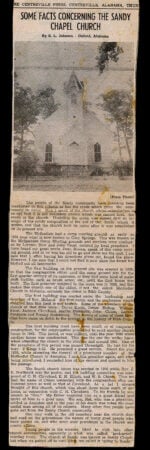
The article pictured here to the left describes camp meetings associated with the original Sandy Springs Church (Centreville) as early as 1800.
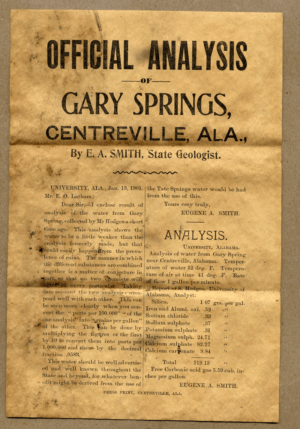
The water was noted for containing large quantities of Epsom salts (magnesium sulfate), per Eugene Allen Smith and Henry McCalley’s Index to the Mineral Resources of Alabama (Alabama Geological Survey Bulletin No. 9, 1904), p. 73 — a state geological survey publication that catalogued Alabama’s mineral springs.
During the Civil War the grounds served as a training camp for local Confederate volunteers, including Company F of the 11th Alabama Infantry (the “Bibb Greys”) before they left for service in 1861.
Resort era (late 19th–early 20th century)
By the early 1900s Gary Springs had become a modest but well-known health and recreation destination. Facilities included:
- a two-story hotel
- a dance hall and billiards room
- a swimming pool (the only one in Bibb County at the time)
- a lake
- a spring house from which healing water was sold
Visitors came from faraway places. Local doctors prescribed the water for certain stomach ailments. The hotel was remodeled in 1928 under new management, with rooms that had connecting baths. The 1920s appear to have been the peak years.
A 1918 newspaper article from the Montgomery Advertiser tells us that a group of men from Centreville organized a fox hunting club, ran annual events, and attracted serious fox hunters to the site. The Masons held annual meetings there. An article that appeared in 1905 announced big improvement plans for the hotel, the formation of an investment community to build it, and plans to attract a rail line to make travel to the site more convenient over long distances. The Birmingham Age Herald reported in 1910 that visitors from Marion travelled to Centreville on their way to a domino tournament scheduled to be held at Gary Springs for players from Bibb and Perry Counties. An elaborate BBQ was scheduled for the visitors. Back in those days the society pages often included a socialites plans to travel to Gary Springs. Status symbols of the day.
Scanning through old newspapers you often find advertisements for the sale of the miracle Gary Springs healing water, to be purchased and conveniently shipped to your location. A 1927 advertisement touts “health giving water. Relieves indigestion, constipation, liver trouble, ulcerated intestines, kidney and bladder troubles. Good tonic. Open for summer boarders. Water shipments have prompt attention. Attending physicians at hotel. W.F. Cornett, proprietor. “ What more could you ask for ?
Decline and mid-20th-century close
 Like many small Alabama mineral-spring resorts, Gary Springs faded in the mid-20th century as automobiles made travel easier, medical thinking changed, and the Great Depression and World War II reduced leisure travel.
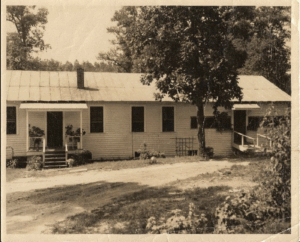
By the 1960s the property had passed to the Lowrey family and was then sold to brothers M.H. and G.C. “Cooter” Milstead, who built new lakes and remodeled remaining houses. The last structure associated with the old resort was a house that had served as hotel registration, dance hall, and billiards room. Most of the property where the hotel and spring house was located still belongs to the surviving Milstead family members according to local tax map records.
The spring itself was lost in the 1990s after a tornado uprooted a tree and diverted the flow. Attempts to relocate it were unsuccessful. Today the area is rural timber and residential land; and the remainder of the resort’s original structures have become victims of time.