
The Penny Cure: The Wart Healer of Hicks Hill
It cost me one penny to get rid of a wart.
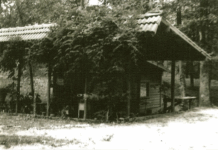
Sometime in the 1950s, when I was a young boy, my mother (Sparkie Hobson) and grandmother (Lonnie Cost) took me over to Hicks Hill, in the Active community near Lawley to see a man named Braxton Hicks. I don’t know if it was called Hicks Hill in those days but today it surely is.
I had a troublesome wart on my arm. It was in a place where a young boy frequently bumped or scraped it. It would break open and bleed, and apparently my mother and grandmother had finally had enough of it.
They knew a man who could make it go away.
His name was Leonard Braxton Hicks.
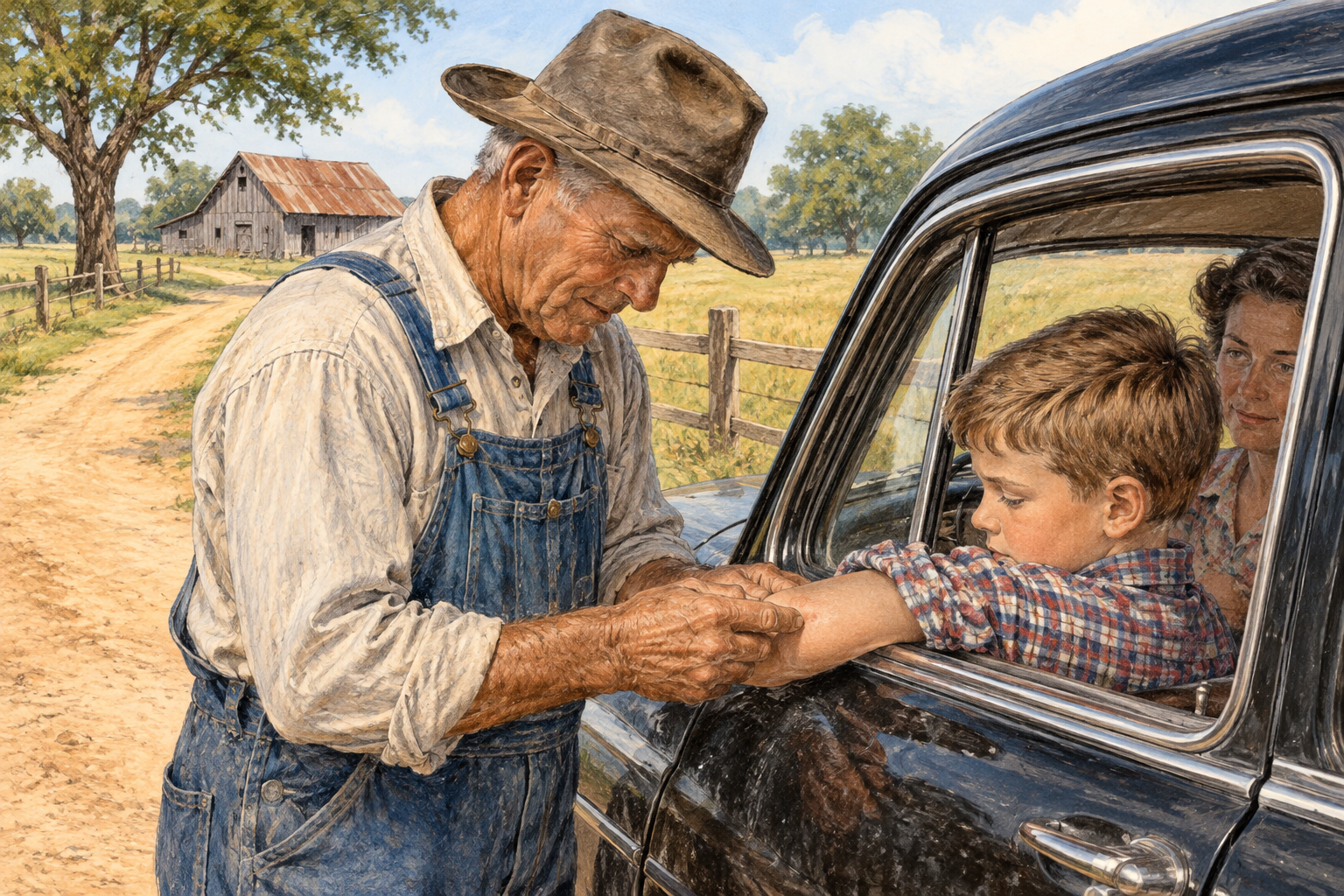
I don’t remember going into his house. In fact, I never got out of the car. Mr. Hicks stopped the farm chores he was performing and came to the automobile window, looked at the wart on my arm and gently rubbed it with his thumb.
That was the treatment.
He told me not to look at it. Don’t put anything on it. Don’t think about it. And the next time I looked, he assured me, it would be gone.
It happened and I have never been troubled again with that wart problem.
There was one other requirement. Something of value had to be sent to Mr. Hicks in payment. It didn’t have to be much. A penny would satisfy the obligation.
I remember my mother making certain that I sent him that penny.
For more than 70 years, that episode remained one of those curious childhood memories that defied explanation. Recently, I began asking questions about the man who rubbed away my wart.
What I found was an old Bibb County folk-healing tradition that survived for generations.
The practice was commonly called “wart charming,” “talking off warts,” or “taking off warts.” Certain individuals were believed to possess a particular gift that allowed them to remove warts, sometimes simply by touching or rubbing them. In other versions they whispered something, “bought” the wart, or performed a ritual known only to the healer.
Most significantly, an 1896 collection of American folk beliefs records an Alabama-specific wart cure in which the healer touched the wart and rubbed it in a notch made in a stick. The patient was not supposed to tell anyone what had been done or the warts might return.
There is also a modern oral-history account from someone specifically recalling an Alabama relative with this ability:
“My granddaddy’s cousin back in Alabama could take them from folks.”
The writer remembered that in the 1960s his brother was taken to the man, who talked with the boy and asked whether he could “have the warts.” Within days, according to the family account, the warts disappeared.
Even better, I found evidence that Alabama folklorists have specifically documented wart healers. Photographer/folklorist Sarah Carter describes being taken to an Alabama “wart healer” after conventional treatment had failed. She and Jennifer Joy Jameson subsequently received a Joyce H. Cauthen Fellowship to document Southern folk-medicine stories for the Alabama State Archives.
And the University of Alabama Press published Jack Solomon’s Cracklin’ Bread and Asfidity: Folk Recipes and Remedies in 1979. It is a collection of Alabama folk medicine and specifically includes traditional cures for warts. Google Books
There is also a perfectly reasonable medical explanation for why these stories became so convincing. Warts are caused by HPV, and many spontaneously regress when the immune system eventually clears the infection. Medical literature has long recognized the curious association between suggestion/psychological influences and wart regression; “wart charming” has actually been discussed in medical literature. PubMed Thus, somebody could rub a wart, confidently pronounce that it would disappear—and occasionally watch exactly that happen.
The healer on Hicks Hill
Leonard Braxton Hicks was born July 25, 1907, the son of John Will Hicks and Nancy Ann Adolphia Sims Hicks. He lived near Lawley in the Active Community area of Bibb County with his wife, Fae.
Braxton died October 23, 1997, at Bibb Medical Center in Centreville. He is buried at Liberty Freewill Baptist Cemetery at Active. Fae lived until 2015, dying at age 98.
But Braxton Hicks left behind something more unusual than the dates and names found in family records and cemetery inscriptions.
He left behind a reputation and a legacy.
People around this part of Bibb County knew that Braxton Hicks could “take off” warts. His grand daughter, Karen Hicks Smith, told me that she remembers people coming from “all over” to see her grandfather.
I recently interviewed his surviving son, Byron Hicks, now 85. Byron confirmed what I remembered from childhood and filled in much of the story that I never knew.
According to Byron, his father’s ability had been passed to him by his mother, Adolphia Hicks.
It wasn’t simply a home remedy that Braxton learned. Within the family it was considered a gift, and there were rules governing how that gift could be passed from one person to another.
A male could pass it to a female, and a female could pass it to a male.
And the secret had to remain a secret.
Passing the gift
Within the last year of his life, Braxton decided that the tradition should continue.
He chose his granddaughter, Kathy Hicks Lightsey.
According to Byron, his father told him that he knew that Kathy could be trusted to keep the ritual secret.
Whatever Braxton told Kathy has apparently remained that way. She has continued the tradition and has healed many, causing troublesome warts to disappear.
Secret.
There may have been a religious component to Braxton’s practice as well.
Byron believes his father’s healing secret had a basis in a passage of Biblical scripture. But Braxton never revealed the scripture to his son, and the exact ritual was not something discussed casually within the family.
Braxton took the secret seriously.
So have those to whom it was entrusted.
The penny mattered
There was another curious part of the practice that I had nearly forgotten until I began talking with members of the Hicks family.
The patient had to give Braxton something of value after the treatment.
A coin or a pencil would do. Even a single penny was enough.
The amount apparently wasn’t important. The act of giving something in return was.
When I heard that detail again, a childhood memory immediately returned. My mother had made certain that I sent Mr. Hicks his penny.
According to the tradition, failing to do so could have consequences.
Byron related the story of a neighbor who had numerous warts on his neck. The man lived with them for years before finally asking Braxton to remove them.
Braxton treated him, and according to the family story, the warts disappeared.
Braxton then asked the man to send the customary payment.
The man demurred. He would not acknowledge that Braxton had been responsible for the warts disappearing.
According to the story passed down by Byron, the man’s warts returned—threefold. He lived the remainder of his life with the disfiguring growths.
Whether the penny had anything to do with what happened is a question I cannot answer.
I can only tell you that my mother made sure I paid mine.
Don’t look at it
Perhaps the strangest part of my own experience was Braxton’s instruction after he rubbed the wart.
Don’t look at it.
Don’t put anything on it.
Don’t think about it.
Just leave it alone.
Then, when you finally do look for it, it will be gone.
For a young boy, that probably wasn’t an easy instruction to follow. But apparently I did.
I cannot tell you how many days passed. More than seven decades have gone by, and some details of childhood become blurred with time.
But I remember the wart.
I remember Braxton coming to the car.
I remember him rubbing it with his thumb.
And I remember that afterward it disappeared.
An old Bibb County tradition
There is a temptation in telling a story like this to try to settle the question.
Was it medicine? Suggestion? Faith? Coincidence? Or did Braxton Hicks possess some ability that cannot be readily explained?
I don’t know.
And perhaps answering that question isn’t necessary.
What can be said is that people in Bibb County and beyond sought out Braxton Hicks because they believed he could remove warts. His family remembers the practice. His son remembers the rules surrounding it. His granddaughter was entrusted with the secret before Braxton died and has continued the practice herself.
And at least one little boy from Bibb County was taken to see him sometime in the 1950s with a wart that repeatedly broke open and bled.
Braxton Hicks looked at it, rubbed it with his thumb and told the boy it would disappear.
The boy did what he was told.
His mother insisted that he send Braxton a bright copper penny.
And the wart went away, forever.
I know this for sure. I was that boy.
And Braxton’s legacy lives on. Karen Hicks Smith named her son Braxton. That family carries tradition and pride in their ancestors.