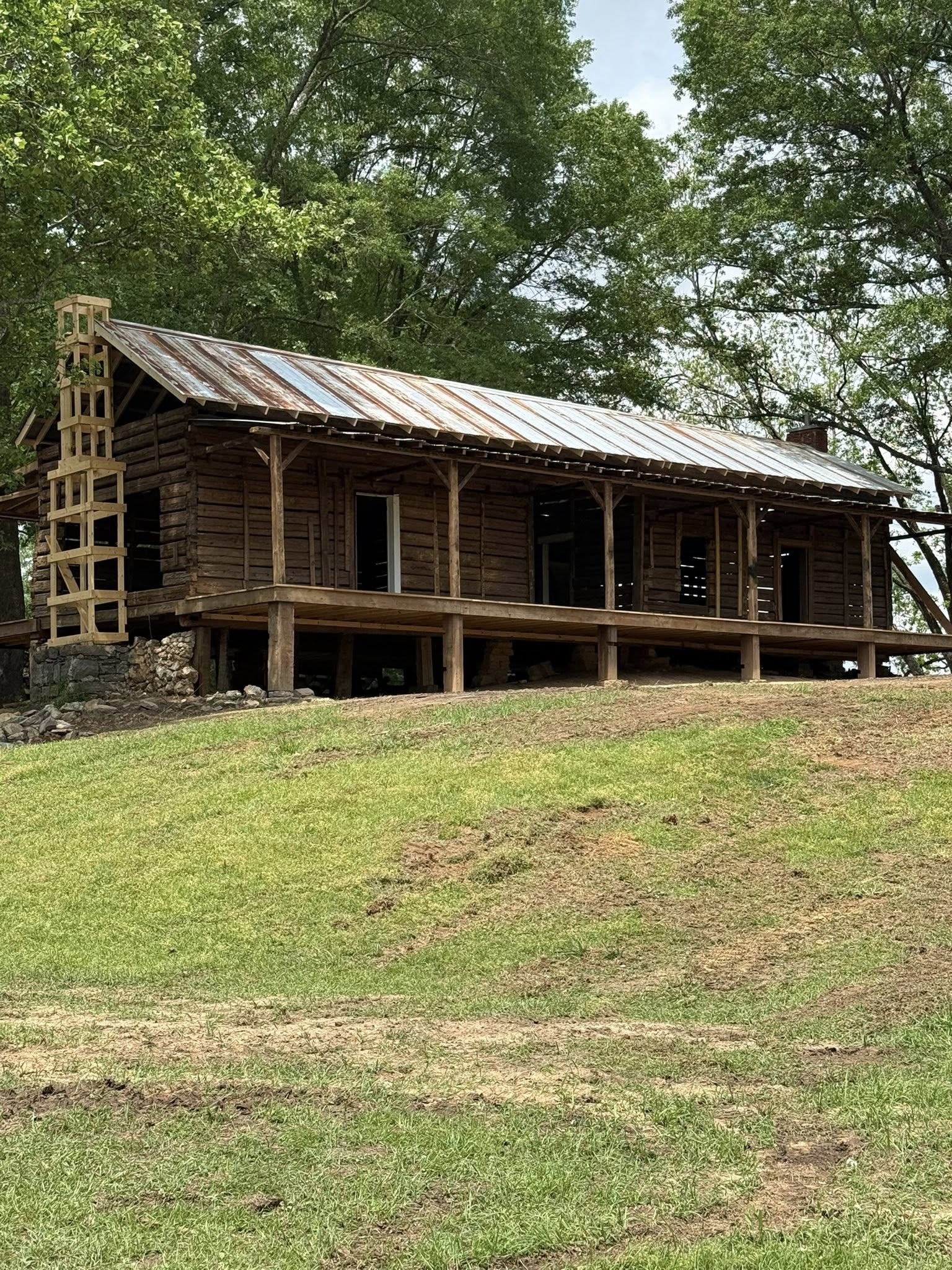

Six Mile Cabin’s Pioneer Roots
By Reporter: Candace Johnson
We previously delved into the historical Six Mile log cabin now owned by the Weaver Family and located along U.S. Highway 25 in the Six Mile community. Now we continue to explore the important history and background of the original owners, the Clabaugh family, and their roots. Bibb County is known for its historical significance, with its rich history beginning in 1818 and Alabama entered Statehood. Bibb County made history, being known as a major producer of iron and coal, and being named after Alabama’s first governor. Something that you may not have known about the area’s pioneers are their ties to Former U.S. Presidents and historical wars and battles.
John Clabaugh was a member of the Clabaugh family, whose family migrated to Alabama from East Tennessee, and finally to Texas. The early 19th century was a time of great change and national expansion for the country. During the War of 1812, tensions escalated between the United States and Great Britain. Because of this, General Andrew Jackson called upon volunteers from Tennessee, which gave the state its current nickname: “The Volunteer State.” Among these volunteers was John Clabaugh.
Clabaugh left his family to enlist as a private in Captain John Roper’s Company, Colonel William Lillard’s 2nd Regiment of the East Tennessee Volunteers. Under General Andrew Jackson, Clabaugh fought against the Creek Nation in the infamous Battles of Talladega and Horseshoe Bend. After being discharged on Feb. 8, 1814, John returned safely to his Tennessee family with new experiences and ready to take advantage of the newly obtained territory.
John Clabaugh and his wife Elizabeth embarked on a migration with Elizabeth’s extended family. From there, they likely moved along the Tennessee River then to the Alabama wilderness, and finally settled in Bibb County, Alabama. This migration made them among Bibb County’s first pioneer families.
Once settled, Clabaugh quickly became active in civic life. As a constable, he maintained law and order in a county still shaping its governance. He helped manage elections and oversaw road maintenance in his militia district, ensuring that vital infrastructure kept pace with the needs of a growing population. In religious life, the family was connected to Cahaba Valley Baptist Church in Brierfield, a congregation that remains active today. Clabaugh quickly became involved in religious life as well, establishing himself within the Cahaba Valley Baptist Church, which still stands in Brierfield.
John Clabaugh established a farm located at Six Mile Creek, which provided vital resources such as fertile land, crops, and access to water. It was also a source for local trade, which further helped contribute to the county’s economy. John’s farm on Six Mile Creek provided fertile land, water access, and a base for both family sustenance and local trade. In the agricultural economy of the 1800s, such farms were essential to community survival and economic growth. Today, his contributions are preserved in the historical record and in the ongoing rehabilitation of landmarks like the Weaver Cabin, reminders of the families who helped shape Bibb County’s identity.
Built in the 1800s, the Six Mile log cabin is a rare surviving example of early settler craftsmanship. The cabin’s preservation links directly to the pioneer era when families like the Clabaughs cleared land, built homes, and established farms along Six Mile Creek. Rehabilitation efforts honor that history while providing a tangible connection for future generations.
As Bibb County continued to grow, its developing communities eventually needed more than farms, churches, and hand-built roads; they needed the financial structure to support expanding commerce. The Clabaugh family’s influence extended into this next chapter as well. Historical records indicate that members of the family were connected to the formation of the Real Estate Banking Company in Selma, reflecting their role in the broader economic growth of central Alabama. This involvement shows how early settlers like the Clabaughs helped shape not only the civic and religious foundations of Bibb County but also the emerging financial networks that would later support towns such as Centreville, Brent, and the wider region.